sábado, 29 de março de 2014

http://artdaily.com/news/68709/French-government-returns-three-paintings-confiscated-by-the-Nazis-during-World-War-II#.Uzcap4V_0f1

7:10 pm / 12 °C The First Art Newspaper on the Net Established in 1996 Portugal Saturday, March 29, 2014 Home Last Week Artists Galleries Museums Photographers Games Subscribe Comments Search Contact French government returns three paintings confiscated by the Nazis during World War II Picture of three paintings confiscated by the Nazis during World War II, taken on March 11, 2014 in Paris, during a ceremony marking their return to their real owners. AFP PHOTO MARTIN BUREAU. Share on facebook Share on twitter Share on email Share on print Share on gmail More Sharing Services 101 PARIS (AFP).- France on Tuesday returned three paintings seized by the Nazis to their rightful owners, just the tip of the iceberg in a country where nearly 2,000 such artworks remain unclaimed. All works of art identified as having been stolen by the Nazis are kept in French museums that are required to report them and put them on display in the hope that the previous owners, their heirs or assignees will spot and claim them. Culture Minister Aurelie Filippetti returned the three paintings -- "Mountain Landscape" by Flemish artist Joos de Momper (1564-1635), a "Portrait of a Woman" oil canvas dating from the 18th century and a "Madonna and Child" painting -- in an official ceremony. Filippetti said she was "happy and moved to once again accomplish an act of reparation and justice", which she described as a "moral duty" of her ministry. "Mountain Landscape" belonged to Baron Cassel van Doorn, a non-Jewish Belgian banker who had homes in France and whose possessions were confiscated by the Nazis in December 1943. The painting had been housed in a museum in the eastern city of Dijon. Jacqueline Domeyco, one of van Doorn's granddaughters, said she was "happy to have recovered a memory". "For a long time in our family nobody spoke of these seizures. It was too tough," said Domeyco, who lives in Chile. The "Portrait of a Woman" canvas was housed by the famed Louvre museum in Paris, and could be the copy of a portrait of an 18th-century actress by French artist Louis Tocque. The artwork belonged to art dealers from Berlin, and was auctioned off in January 1935 as part of the public sale of Jewish goods. The last painting, which the Nazis seized in June 1944 in the southern French city of Cannes and was also held by the Louvre, was claimed by the great-granddaughter of a banker who owned the artwork. So far, France has managed to return only around 70 pieces of art that were seized by the Nazis to their owners. © 1994-2014 Agence France-Presse Today's News March 12, 2014 French government returns three paintings confiscated by the Nazis during World War II Paintings commissioned by one of Britain's greatest actors acquired by The Bowes Museum Metropolitan Museum launches MetCollects, an online series featuring recently acquired works of art Getty completes conservation of Jackson Pollock's milestone painting Mural, on view at the Getty Sotheby's announces a unique sale bringing together British art and design from the twentieth century Exceptional Torah, estimated at €1,000,000-1,500,000, to be offered at Christie's Paris on 30 April Andy's World: Christie's announces online-only sale to benefit the Andy Warhol Foundation for the Visual Arts Dinosaur-killing impact acidified oceans says study by Japanese scientists A collection of unseen Henry Moore prints to be offered at Dreweatts & Bloomsbury Auctions' sale Scholars rediscover a lost American artist; Book celebrates 90th anniversary of her first masterpiece Art Deco masterpieces from the private collection of Félix Marcilhac exceed estimates Spacesuits and moon notes from Apollo 11 among the stars at Bonhams Space History Sale The Estate of Baron Pierre DeMenasce to highlight Doyle New York's March 17 Asian Works of Art Sale Rare 17th century longcase clock sells for £286,800 at Dreweatts & Bloomsbury Auctions Monumental sculpture created by Dimitar Lukanov for JFK's Terminal 4 redevelopment Cartes de visite of Abraham Lincoln and son Tad, other historic photos to be auctioned March 20 by Waverly When "Life" is a £20,000 present: A gift from a wandering Indian artist for sale at Bonhams "Dana Kyndrová: Woman's Destiny" opens at Rosphoto, State Museum and Exhibition Centre A Groovy Kind of Love at Strauss & Co: are and undocumented work by Stanley Pinker to rock the market The Cheng Huan S.C., Collection of Chinese and Tibetan Buddhist art for sale at Bonhams Marfa: Cultural oasis in Texas desert Hayward Gallery presents a solo exhibition by Jananne Al-Ani Most Popular Last Seven Days 1.- Swedish artist Jonas Dahlber's landscape memorial to Breivik victims sparks outrage in Norway 2.- French police recover Rembrandt stolen 15 years ago 3.- Major Robert Mapplethorpe retrospective exhibition opens at the Grand Palais in Paris 4.- Rembrandt's Claudius Civilis temporarily on view at the Rijksmuseum in Amsterdam 5.- 160 works by Frida Kahlo on display for the first time in Italy at the Scuderie del Quirinale 6.- "Veronese: Magnificence in Renaissance Venice" opens at the National Gallery in London 7.- Man admits theft of Rembrandt's "Child with a Soap Bubble" missing for 15 years 8.- London's Natural History Museum: Earliest Human Skull-Cups Made in the UK 9.- Thieves steal depiction of the goddess Artemis; "Chiseled off" with a metallic object 10.- Henie Onstad Kunstsenter returns Matisse painting to art dealer Paul Rosenberg's heirs Allow Andy Warhol In A Flower Patch To Cure You Of Your Winter Blues Keith Haring's Album Covers, T-Shirts And More Go On View The Voyeur's Guide To Navigating A Crowd The History Of 'Comfort Women': A WWII Tragedy We Can't Forget Everything A Feminist Needs To Know About Quilting Happy Birthday, Rene Magritte! How We View The Middle East, From YouTube Clips To 19th Century Orientalist Paintings 'Tea And Morphine' Exposes A Darker Side Of 19th Century Women Museums, Exhibits, Artists, Milestones, Digital Art, Architecture, Photography, Photographers, Special Photos, Special Reports, Featured Stories, Auctions, Art Fairs, Anecdotes, Art Quiz, Education, Mythology, 3D Images, Last Week, . Founder: Ignacio Villarreal Editor & Publisher: Jose Villarreal - Consultant: Ignacio Villarreal Jr. Art Director: Juan José Sepúlveda Rmz. - Marketing: Carla Gutiérrez Special Contributor: Liz Gangemi - Special Advisor: Carlos Amador Contributing Editor: Carolina Farias Royalville Communications, Inc produces: ignaciovillarreal.org theavemaria.org juncodelavega.org facundocabral-elfinal.org Founder's Site. The most varied versions of this beautiful prayer. Hommage to a Mexican poet. Hommage The First Art Newspaper on the Net. The Best Versions Of Ave Maria Song Junco de la Vega Site Ignacio Villarreal Site

More Information: http://artdaily.com/news/68709/French-government-returns-three-paintings-confiscated-by-the-Nazis-during-World-War-II#.Uzcap4V_0f1[/url]
Copyright © artdaily.org
http://artdaily.com/news/68709/French-government-returns-three-paintings-confiscated-by-the-Nazis-during-World-War-II#.Uzcap4V_0f1http://artdaily.com/news/68709/French-government-returns-three-paintings-confiscated-by-the-Nazis-during-World-War-II#.Uzcap4V_0f1
French government returns three paintings confiscated by the Nazis during World War II Picture of three paintings confiscated by the Nazis during World War II, taken on March 11, 2014 in Paris, during a ceremony marking their return to their real owners. AFP PHOTO MARTIN BUREAU. Share on facebook Share on twitter Share on email Share on print Share on gmail More Sharing Services 101 PARIS (AFP).- France on Tuesday returned three paintings seized by the Nazis to their rightful owners, just the tip of the iceberg in a country where nearly 2,000 such artworks remain unclaimed. All works of art identified as having been stolen by the Nazis are kept in French museums that are required to report them and put them on display in the hope that the previous owners, their heirs or assignees will spot and claim them. Culture Minister Aurelie Filippetti returned the three paintings -- "Mountain Landscape" by Flemish artist Joos de Momper (1564-1635), a "Portrait of a Woman" oil canvas dating from the 18th century and a "Madonna and Child" painting -- in an official ceremony. Filippetti said she was "happy and moved to once again accomplish an act of reparation and justice", which she described as a "moral duty" of her ministry. "Mountain Landscape" belonged to Baron Cassel van Doorn, a non-Jewish Belgian banker who had homes in France and whose possessions were confiscated by the Nazis in December 1943. The painting had been housed in a museum in the eastern city of Dijon. Jacqueline Domeyco, one of van Doorn's granddaughters, said she was "happy to have recovered a memory". "For a long time in our family nobody spoke of these seizures. It was too tough," said Domeyco, who lives in Chile. The "Portrait of a Woman" canvas was housed by the famed Louvre museum in Paris, and could be the copy of a portrait of an 18th-century actress by French artist Louis Tocque. The artwork belonged to art dealers from Berlin, and was auctioned off in January 1935 as part of the public sale of Jewish goods. The last painting, which the Nazis seized in June 1944 in the southern French city of Cannes and was also held by the Louvre, was claimed by the great-granddaughter of a banker who owned the artwork. So far, France has managed to return only around 70 pieces of art that were seized by the Nazis to their owners.

More Information: http://artdaily.com/news/68709/French-government-returns-three-paintings-confiscated-by-the-Nazis-during-World-War-II#.Uzcap4V_0f1[/url]
Copyright © artdaily.org
French government returns three paintings confiscated by the Nazis during World War II Picture of three paintings confiscated by the Nazis during World War II, taken on March 11, 2014 in Paris, during a ceremony marking their return to their real owners. AFP PHOTO MARTIN BUREAU. Share on facebook Share on twitter Share on email Share on print Share on gmail More Sharing Services 101 PARIS (AFP).- France on Tuesday returned three paintings seized by the Nazis to their rightful owners, just the tip of the iceberg in a country where nearly 2,000 such artworks remain unclaimed. All works of art identified as having been stolen by the Nazis are kept in French museums that are required to report them and put them on display in the hope that the previous owners, their heirs or assignees will spot and claim them. Culture Minister Aurelie Filippetti returned the three paintings -- "Mountain Landscape" by Flemish artist Joos de Momper (1564-1635), a "Portrait of a Woman" oil canvas dating from the 18th century and a "Madonna and Child" painting -- in an official ceremony. Filippetti said she was "happy and moved to once again accomplish an act of reparation and justice", which she described as a "moral duty" of her ministry. "Mountain Landscape" belonged to Baron Cassel van Doorn, a non-Jewish Belgian banker who had homes in France and whose possessions were confiscated by the Nazis in December 1943. The painting had been housed in a museum in the eastern city of Dijon. Jacqueline Domeyco, one of van Doorn's granddaughters, said she was "happy to have recovered a memory". "For a long time in our family nobody spoke of these seizures. It was too tough," said Domeyco, who lives in Chile. The "Portrait of a Woman" canvas was housed by the famed Louvre museum in Paris, and could be the copy of a portrait of an 18th-century actress by French artist Louis Tocque. The artwork belonged to art dealers from Berlin, and was auctioned off in January 1935 as part of the public sale of Jewish goods. The last painting, which the Nazis seized in June 1944 in the southern French city of Cannes and was also held by the Louvre, was claimed by the great-granddaughter of a banker who owned the artwork. So far, France has managed to return only around 70 pieces of art that were seized by the Nazis to their owners.

More Information: http://artdaily.com/news/68709/French-government-returns-three-paintings-confiscated-by-the-Nazis-during-World-War-II#.Uzcap4V_0f1[/url]
Copyright © artdaily.org
French government returns three paintings confiscated by the Nazis during World War II Picture of three paintings confiscated by the Nazis during World War II, taken on March 11, 2014 in Paris, during a ceremony marking their return to their real owners. AFP PHOTO MARTIN BUREAU. Share on facebook Share on twitter Share on email Share on print Share on gmail More Sharing Services 101 PARIS (AFP).- France on Tuesday returned three paintings seized by the Nazis to their rightful owners, just the tip of the iceberg in a country where nearly 2,000 such artworks remain unclaimed. All works of art identified as having been stolen by the Nazis are kept in French museums that are required to report them and put them on display in the hope that the previous owners, their heirs or assignees will spot and claim them. Culture Minister Aurelie Filippetti returned the three paintings -- "Mountain Landscape" by Flemish artist Joos de Momper (1564-1635), a "Portrait of a Woman" oil canvas dating from the 18th century and a "Madonna and Child" painting -- in an official ceremony. Filippetti said she was "happy and moved to once again accomplish an act of reparation and justice", which she described as a "moral duty" of her ministry. "Mountain Landscape" belonged to Baron Cassel van Doorn, a non-Jewish Belgian banker who had homes in France and whose possessions were confiscated by the Nazis in December 1943. The painting had been housed in a museum in the eastern city of Dijon. Jacqueline Domeyco, one of van Doorn's granddaughters, said she was "happy to have recovered a memory". "For a long time in our family nobody spoke of these seizures. It was too tough," said Domeyco, who lives in Chile. The "Portrait of a Woman" canvas was housed by the famed Louvre museum in Paris, and could be the copy of a portrait of an 18th-century actress by French artist Louis Tocque. The artwork belonged to art dealers from Berlin, and was auctioned off in January 1935 as part of the public sale of Jewish goods. The last painting, which the Nazis seized in June 1944 in the southern French city of Cannes and was also held by the Louvre, was claimed by the great-granddaughter of a banker who owned the artwork. So far, France has managed to return only around 70 pieces of art that were seized by the Nazis to their owners.

More Information: http://artdaily.com/news/68709/French-government-returns-three-paintings-confiscated-by-the-Nazis-during-World-War-II#.Uzcap4V_0f1[/url]
Copyright © artdaily.org

1,800-year-old letter from Egyptian soldier deciphered

1,800-year-old letter from Egyptian soldier deciphered

letter1

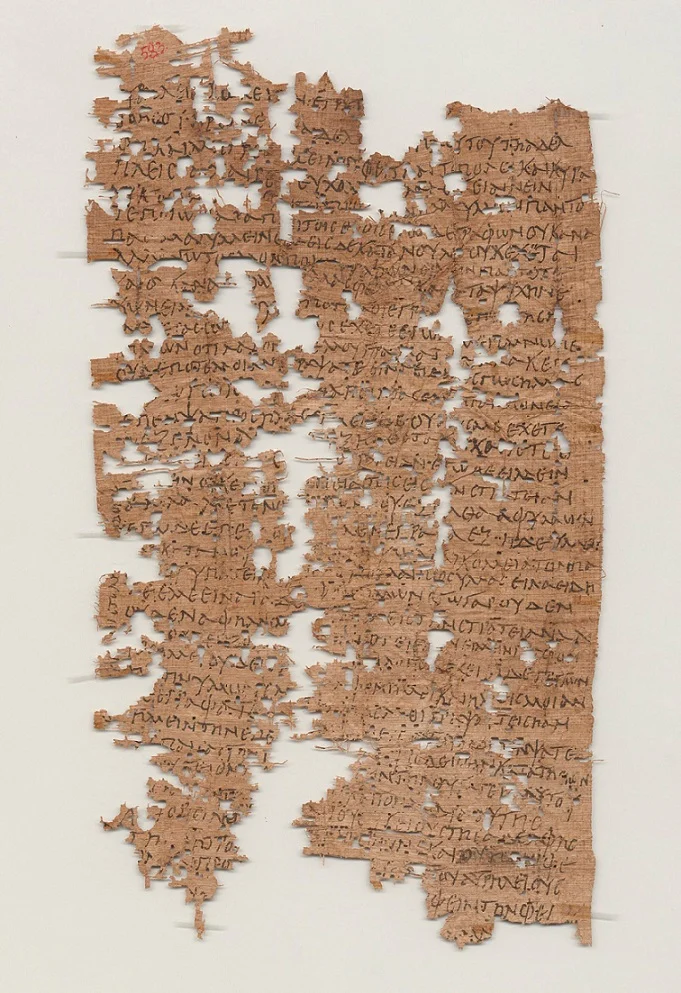
A newly deciphered 1,800-year-old letter from an Egyptian solider serving in a Roman legion in Europe to his family back home shows striking similarities to what some soldiers may be feeling here and now.

Grant Adamson, a student at Rice University took up the task in 2011 when he was assigned the papyrus to work on during a summer institute hosted at Brigham Young University (BYU).
The private letter sent home by Roman military recruit Aurelius Polion was originally discovered in 1899 by the expedition team of Grenfell and Hunt in the ancient Egyptian city of Tebtunis. It had been catalogued and described briefly before, but to this point no one had deciphered and published the letter, which was written mostly in Greek.
“This letter was just one of many documents that Grenfell and Hunt unearthed,” Adamson said. “And because it was in such bad shape, no one had worked much on it for about 100 years.” Even now portions of the letter’s contents are uncertain or missing and not possible to reconstruct.
Polion’s letter to his brother, sister and his mother, “the bread seller,” reads like one of a man who is very desperate to reach his family after sending six letters that have gone unanswered. He wrote in part:
“I pray that you are in good health night and day, and I always make obeisance before all the gods on your behalf. I do not cease writing to you, but you do not have me in mind. But I do my part writing to you always and do not cease bearing you (in mind) and having you in my heart. But you never wrote to me concerning your health, how you are doing. I am worried about you because although you received letters from me often, you never wrote back to me so that I may know how you.
“I sent six letters to you. The moment you have(?) me in mind, I shall obtain leave from the consular (commander), and I shall come to you so that you may know that I am your brother. For I demanded(?) nothing from you for the army, but I fault you because although I write to you, none of you(?) … has consideration. Look, your(?) neighbor … I am your brother.”
Adamson believes that Polion was stationed in the Roman province of Pannonia Inferior at Aquincum (modern day Budapest), but he said that the legion to which Polion belonged is known to have been mobile and may have traveled as far as Byzantium (modern day Istanbul).
“Polion was literate, and literacy was rarer then that it is now, but his handwriting, spelling and Greek grammar are erratic,” Adamson said, which made English translation of the damaged letter even more difficult. “He likely would have been multilingual, communicating in Egyptian or Greek at home in Egypt before he enlisted in the army and then communicating in Latin with the army in Pannonia.”
Adamson believes Polion wrote home in Greek because writing home in Egyptian was not really an option at the time, and because his family in Egypt most likely did not know much Latin.
To establish an approximate date for the letter, Adamson depended on handwriting styles and a few other more specific hints.
“Dating ancient papyri is generally hard to do very specifically unless there happens to be a date or known event mentioned in the text,” Adamson said. “But you can make a preliminary decision based on the handwriting.”
Image courtesy of University of California, Berkley's Bancroft Library. - See more at: http://news.rice.edu/2014/03/14/rice-grad-student-deciphers-1800-year-old-letter-from-egyptian-soldier/#sthash.y5R3sVXA.dpuf
Image courtesy of University of California, Berkley’s Bancroft Library
Another hint is the soldier’s Roman name Aurelius; he could have acquired it as part of a widespread granting of Roman citizenship in the year 212. And another hint is Polion’s reference to a “consular commander,” which suggests a date after 214 when the Roman province of Pannonia Inferior came under consular governance.
Because of the letter’s personal nature and common theme of familial concern, Adamson’s publication of it in the latest volume of the Bulletin of the American Society of Papyrologists has been receiving national and international media attention.
“One thing that I think is important about this letter is that it reflects the emotions of a soldier in the ancient world,” said April DeConick, chair of Rice’s Religious Studies Department and Adamson’s faculty adviser. “His emotions are really no different than those of soldiers today, who are longing to go home.”
The papyrus, which was on loan to BYU in 2011, is housed at the University of California, Berkley’s Bancroft Library.

Kangaroo in 400-year-old manuscript could change Australian history


A 16th century manuscript featuring an image that looks like a kangaroo could prove that Portuguese explorers discovered Australia before the first recorded European landing in 1606

A drawing of a kangaroo on a 16th century Portuguese manuscript could potentially change the world's understanding of Australia's history.
The manuscript, which is thought to date from between 1580 and 1620, appears to show a small kangaroo within the letters of its text. If the image actually is a kangaroo, the drawing suggests that Portuguese explorers may have discovered Australia before the first recorded European landing on the continent by Dutch navigator Willem Janszoon in 1606.
The document, which contains text or music for a liturgical procession, was recently acquired by the Les Enluminures Galley in New York, which has valued the item at $15,000 (£9,174). It was previously in the possession of a rare book dealer in Portugal.
Laura Light, a researcher at the gallery, told Australia's The Age newspaper that "a kangaroo or wallaby in a manuscript this early is proof that the artist of this manuscript had either been in Australia, or even more interestingly, that travellers' reports and drawings of the interesting animals found in this new world were already available in Portugal."
The text also includes the image of two half-naked men wearing crowns of leaves, which researchers believe may represent Australian aborigines.

Siena, si apre alle visite il pavimento del Duomo

Siena, si apre alle visite il pavimento del Duomo

Unesco stops unauthorised reconstruction of Bamiyan Buddhas

Unesco stops unauthorised reconstruction of Bamiyan Buddhas

Organisation says actions of German archaeologists who have partially rebuilt one of the statues “border on the criminal”

German archaeologists have rebuilt the lower appendages of the smaller statue
The international community has reacted furiously to news that a German-led team of archaeologists has been reconstructing the feet and legs of the smaller of the two Bamiyan Buddhas, the monumental Afghan sculptures blown up by the Taliban in 2001. News of this reconstruction, which has taken place without Unesco’s knowledge or permission, was revealed during the 12th meeting of Unesco’s Bamiyan working group, in Orvieto, Italy, in December.
A team of archaeologists from the German branch of Icomos (the International Council on Monuments and Sites), led by Michael Petzet, who himself served as the head of Icomos from 1999 to 2008, spent most of last year rebuilding the smaller Buddha’s lower appendages with iron rods, reinforced concrete and bricks, an operation that Francesco Bandarin, Unesco’s assistant director-general for culture, describes as “wrong on every level”. He says: “Unesco has nothing to do with this project. It was undertaken without the consent of the Afghan government and has now been stopped.”

Andrea Bruno, the architectural consultant to Unesco for the past 40 years, confirms that the work was carried out “against Unesco’s decision [taken in 2011] not to rebuild the Buddhas” and says the organisation was never made aware that the project was going ahead. Bruno says the work has caused “irreversible damage, bordering on the criminal”. He adds that the work had not yet started when he visited Afghanistan last March.

Petzet told The Art Newspaper that he and his team “just wanted to preserve what can be preserved”. He says: “Everything we have done was discussed with the Afghan authorities: this [project] is nothing new.” However, Bandarin says that the Afghan minister of culture was not aware of the work when Bandarin asked him to put a stop to it.

Petzet says that his team’s funding was originally provided by Unesco. Bandarin has confirmed that Unesco “has a contract with Icomos Germany to build a platform [where the smaller Buddha once stood] to protect visitors from falling rocks”, but reiterates that the reconstruction work was not part of the deal and that Unesco wants to dismantle the results.

The question is: how did Petzet’s team manage to carry out such extensive work without anyone noticing? “Things like this can happen in such a remote Afghan province,” Bandarin says, “especially since they have worked there for years before this.” Icomos, which was founded in 1965 and works to conserve and protect heritage sites around the world, advises Unesco on World Heritage Sites, but Unesco remains in charge of their management, conservation and restoration. Experts at Unesco asked the central Icomos office to file a report to the Afghan authorities by the beginning of this month, and an additional report on the matter is due to be presented to the World Heritage Committee in June.

The Buddhas once stood along the ancient Silk Route in the remote Hazarajat region of central Afghanistan, around 250km west of Kabul. The sculptures—53m and 35m tall—were carved into the side of a cliff in the Bamiyan valley in the sixth century, at the height of the Kushan empire and before the Islamic invasion of the late seventh century. Several attempts were made to destroy the statues during centuries of Islamic rule, until the Taliban brought them down with anti-aircraft guns, artillery and dynamite.

When less is more

The future of the site was formally decided at a Unesco meeting in Tokyo in 2011. The organisation reviewed numerous plans for the site’s conservation or restoration, ranging from laser projections of the Buddhas onto the cliff face to Michael Petzet’s proposal to reassemble the surviving fragments of the smaller Buddha in its niche using metal frames. But the final decision was to leave the niches empty. Andrea Bruno told The Art Newspaper in May 2012 that “the void is the true sculpture” and that the Buddhas would be best remembered through their absence. Rebuilding them could also cause offence to the country’s Muslims, because Islam forbids religious images.

Nevertheless, their destruction was a disaster for the local population of Shia Muslims, who have been persecuted by the Taliban, because it deprived them of what little income they had from foreign visitors. A Unesco-led project aims to encourage visitors in the future with a series of initiatives.

Salvage Drive for Rare Jewish Mural in Vermont


BURLINGTON, Vt. — The mural was created inside a synagogue in 1910 by a sign painter named Ben Zion Black, who had just moved to this city’s growing Jewish community from Lithuania. He was paid $200 by the Chai Adam congregation for what became a two-story artwork in a style that was common in Eastern Europe’s painted wooden synagogues. Most vanished in the Holocaust.
Now it seems that the work here in Burlington — a city better known as the birthplace of the rock band Phish than as a cradle of Jewish history — is among the most complete existing examples of this kind of folk art. And few people knew it existed.
For more than 25 years it disappeared from view, walled off by Sheetrock when the building — first a synagogue, then retail stores — was converted into apartments. It remained hidden until a couple of years ago, when some of the city’s Jews began devising a plan to uncover and preserve the mural.
“Because this is the only one of its kind in the world, there’s no choice,” said Aaron Goldberg, 57, an estate planner who is the archivist at the city’s Ohavi Zedek synagogue, with which Chai Adam merged and which is leading the preservation effort.


To do that, Mr. Goldberg and others have begun a complex and costly effort to stabilize and clean the ravaged surface, remove the roof and wooden beams around it and extract it from the building, in one piece, if possible. They plan eventually to install it in the lobby of Ohavi Zedek.
For much of its century-long history, the mural was viewed as a decidedly local curiosity. The synagogue in which it was painted was at the center of a section of town that was laid out like the Lithuanian shtetl from which many of its residents — including Mr. Goldberg’s ancestors — had emigrated, with synagogues surrounded by purveyors of kosher goods in “Little Jerusalem” in Burlington’s Old North End.
The mural, which originally sat behind the synagogue’s ark and rose to adorn the arched ceiling, was a rendering of traditional Jewish iconography: two rampant lions of Judah on either side of a tablet of the Ten Commandments beneath a Torah crown. The images are shrouded by elaborate curtains that evoke the Tabernacle, the Israelites’ tentlike desert sanctuary.
Photo
Ms. Silver restoring the mural. Credit Jacob Hannah for The New York Times
But the artist, a lover of music and Yiddish theater, added personal touches: The work shows musical instruments, dismaying some in the congregation, according to the archives. The upper part of the mural that rose above the ark survives; the lower half and the adornment of the ceiling having been lost over the years, after the building entered private hands.
In 1939, Chai Adam merged with Congregation Ohavi Zedek, and the mural later became a peculiar backdrop for the stores that later filled the space.
“It was kind of an intriguing oddity that was surrounded, as I recall in youth, by carpets and business and things of the sort,” said Jeffrey Potash, 60, who is also an archivist at Ohavi Zedek and who, like Mr. Goldberg, grew up here, noticing the mural. “So I never gave it much thought.”
Photo
The painter, Ben Zion Black, right, with his wife.
But Mr. Goldberg’s intuition told him the mural was worth saving. When the building was to be converted into apartments in 1986, he tried in vain to find an institution that would take the mural. He made archival photos and had the mural hidden behind a false wall in the hope of eventually preserving it. At the time, Mr. Goldberg said, “There was really very little scholarly work that had been done on the lost painted synagogues. We couldn’t even determine what we had then.”
For nearly 25 years, he says, tenants filled the apartment with no idea it was there. But it gnawed at Mr. Goldberg, who had a segment of the wall opened and resealed in 2010, and then began exploring his options to preserve the mural.
When the building was sold again, he approached its new owner, Steven Offenhartz, who was not himself sure what was behind the wall.
Photo
The original mural depicted in the same book.
“I’d heard rumors that it was there,” he said, but after learning more he agreed to donate the mural to Ohavi Zedek in the name of his father, Michael. Mr. Goldberg and the synagogue rented the apartment that held it. In 2012, Mr. Goldberg and Mr. Potash arranged to take down the Sheetrock and consulted with preservation experts to devise a plan to save the mural.
Last year, the mural caught the attention of Samuel D. Gruber, an art and architecture historian who has lectured at Syracuse University and who has extensively studied the Eastern European painted synagogues. He was astonished by the mural. He said that he had seen pieces of surviving murals in Europe, and examples of decorated synagogues in Chelsea, Mass., and Toronto, but that he had not seen such a complete segment of the decoration where so much was known about the artist. “When I saw the first photos of it, I knew it was special. I couldn’t point to a single other example like it anywhere,” said Mr. Gruber, who added, “I really didn’t expect to see this in Burlington.”
On a recent afternoon, a conservator, Constance Silver, of Brattleboro, Vt., had her tools spread out in front of the mural. A breeze from outside ruffled the plastic that was helping to stabilize segments of paint. Tiny, crispy specks of paint had already fallen off the wall, dusting the carpet.
“This is about as close as it gets to self-destructing,” Ms. Silver said. The work, she said, was painted directly onto the plaster of the synagogue’s wall, which has absorbed the paint’s oils, rendering them dry as cornflakes, which she is now securing, square by square. And the mural has yellowed with the grime of indoor smoking and cooking from the kitchen. When the paint is fully stabilized, Ms. Silver will clean it. She already knows this will electrify its colors — including turning the curtains it depicts from dark green to a bright blue, consistent with Jewish symbolism.
But restoration and relocation will be expensive. So far the organizers say they have raised at least $64,000 of the several hundred thousand that will be needed for that process, and to create educational materials around it. But for those who have seen the piece, the cost is beside the point, as is its monetary value.
Elizabeth Berman, a Boston appraiser who is working with Mr. Offenhartz and Mr. Goldberg, said it would be difficult to assign a value to the mural because there was little to compare it to. “This issue is that it’s so rare and we don’t really see cases like this in the appraisal world,” she said.
Mr. Gruber, the historian, said, “We’re not talking about a great art masterpiece,” but added, “What really makes it special is that it is a survivor.”

Ancient fresco stolen from Pompeii

Ancient fresco stolen from Pompeii

Italy’s culture ministry calls emergency meeting to address security issues at the site

A 20 cm-wide section of the fresco, showing the goddess Artemis and her twin brother Apollo, was reportedly removed with a metal object
The Italian culture minister has called the second emergency meeting this month with the heads of Pompeii to “reinforce management and security” after part of a fresco was stolen from the House of Neptune and Amphitrite.
Dario Franceschini met Wednesday with the archaeological site’s new superintendent, Massimo Osanna, the director general, Giovanni Nistri, the deputy director, Fabrizio Magani, of the “Great Pompeii Project”, and the commander of the art crime unit of the carabinieri, Mariano Ignazio Mossa. This meeting comes less than three weeks after politicians convened to discuss the collapse of buildings at the site caused by heavy rains.

The group decided on a number of measures to take immediate effect, including recruiting extra guards, installing new video cameras and fences, consulting with the carabinieri on theft prevention and with Rome’s state school of conservation on the damage done to the House of Neptune and Amphitrite.

A 20 cm-wide section of the fresco, showing the goddess Artemis and her twin brother Apollo, was reportedly removed with a metal object. The theft was discovered by a guard on 12 March, but withheld for several days as police carried out preliminary investigations. It is not known when it occurred, as the area is closed to visitors and not covered by the 24-hour video surveillance system.

An initial theory that the fresco had been taken away for conservation was quickly disproved. Another wall painting fragment, from the House of the Orchard, was previously stolen from an on-site laboratory during restoration, the Italian newspaper La Repubblica reports. It was returned anonymously in January from a post office in Florence.